Mobile Phone Technology
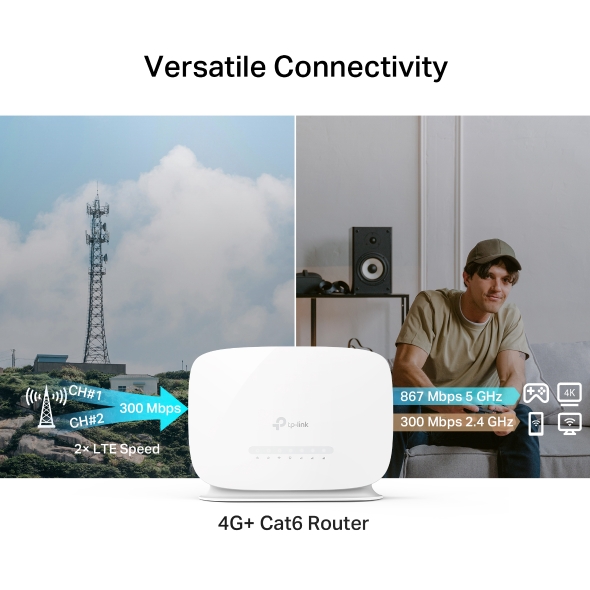
TP_Link Mobile Router.
image ©tp-link.comThere are two types of mobile router available to purchase and use. A 'mobile' mobile router is one that can be carried about, in a pocket and is battery powered. A 'fixed' or 'home' mobile router is similar to a standard router, not really moveable and requires to be plugged in to work. However both of these use the same underlying technology. They deliver WiFi in the house or room but rather than providing the backhaul over copper or fibre connections, it is provided via the mobile network. There are a number of factors to take into account when considering using a mobile router rather than a standard router :
- Speed : The connection speed of the mobile router depends on the strength and usage of the mobile signal locally. However in areas of good 4G+ or 5G signal a speed of 100Mbps is quite likely. If the home only has a copper FTTC connection then the maximum speed available will be 76Mbps but often the signal will be less than 35Mbps. Area with fibre (FTTP) will be able to get much faster speeds. Currently in the Uk the cost rises with the faster FTTP connections. Speeds over 100Mbps are easily possible with FTTP.
- Capacity :How much data, per month, is used. Broadband contracts will usually have an unlimited amount of data available. There are mobile SIM contracts that give the same unlimited data. There are capped mobile SIMs available that are at a lower cost than unlimited data. In reality, unless the home owner is a large gamer capacity will not be an issue for mobil broadband in the home. users that browse, check their mail, watch movies on the Internet will be OK with capped sims at 100Gb or more.
- Price : A contract for a mobile SIM only with unlimited data using 4G or 5G will be around £25pcm. For a BT contract for 500Mbps will be around £35pcm. Thus mobile costs can be less than a fixed line broadband contract.
Advantages of a mobile router : In areas of good 4G signal the mobile broadband is comparable to a fixed home router. It can be situated anywhere in the home. Also smaller mobile broadband devices are mobile and can be taken on holiday, used whilst travelling, used in hotels and cafes with a greater level of security. No landline is needed in the home with potentially a cost saving.
Disadvantages of a mobile router : The mobile signal varies more than the fixed broadband especially at times of heavy mobile use. Also the latency of a mobile signal can be greater than the fixed broadband signal. To use mobile broadband a good 4G / 5G signal is needed in order to usable speed. Heavy users, especially gamers, may find a mobile broadband not suitable.
We may have started to use our mobile phones to make phone calls but now these devices are key to our modern society. We use our mobile phones for directions in a strange city; to access our money through our banking and credit card apps; for tickets to travel whether that is bus, train or air; tow watch videos; to take images and buy stuff.
To allow all these applications we need a robust mobile network. mpt-5g.co.uk seeks to provide information about the technology behind the mobile phone in order to aid understanding and promote more realistic discussions about the technology. Understanding some of the basics of mobile phone technology will help explain how things work and what can and cannot be done with mobile phone technology.
mpt-5g.co.uk is a FREE online resource. Have you found it interesting? You can say thank you and buy me a coffee here. Thank you very much.
w : mpt-5g.co.uk
e :
 Blog
Blog
© mobilephonetechnology.co.uk all rights reserved 2017-2025