Mobile Phone Technology
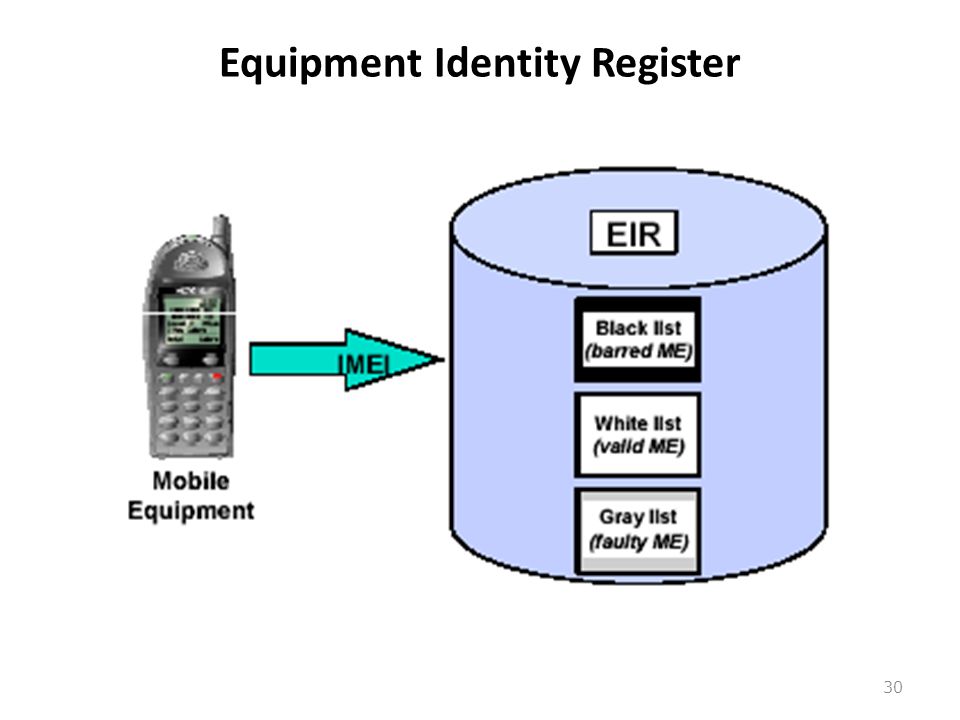
EIR - Connecting to the network.
image ©slideplayer.comEach mobile network needs to keep lists of equipment that can and cannot connect to their network. This is to ensure the integrity of the network. The Equipment Identity Register (EIR) is part of the core of the network. It maintains lists of equipment that has tried to connect to a mobile phone network. Each device trying to connect to the network has a unique IMEI, which is a unique number allocated by manufacturer. This is used to Authenticate (or not) a device when it tries to connect. The register maintains 3 lists :
- White List - the first time a piece of (valid) equipment tries to connect to a mobile network it is put onto the White List. All future connection will check that the device is on this white list.
- Black List - this is the list of barred equipment; stolen or devices that when they are connected have had a negative effect on the network - they do not confirm to the network standards.
- Grey List - the list of equipment that is classed as non-conforming. They are not bared but do not conform in some way.
We may have started to use our mobile phones to make phone calls but now these devices are key to our modern society. We use our mobile phones for directions in a strange city; to access our money through our banking and credit card apps; for tickets to travel whether that is bus, train or air; tow watch videos; to take images and buy stuff.
To allow all these applications we need a robust mobile network. mpt-5g.co.uk seeks to provide information about the technology behind the mobile phone in order to aid understanding and promote more realistic discussions about the technology. Understanding some of the basics of mobile phone technology will help explain how things work and what can and cannot be done with mobile phone technology.
mpt-5g.co.uk is a FREE online resource. Have you found it interesting? You can say thank you and buy me a coffee here. Thank you very much.
w : mpt-5g.co.uk
e :
 Blog
Blog
© mobilephonetechnology.co.uk all rights reserved 2017-2025