Mobile Phone Technology
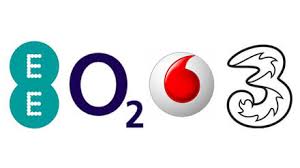
UK Mobile Network Operators.
image ©trinitymaxwell.comA Mobile Network Operator (MNO), also known as a Mobile Network Carrier, is a provider of the infrastructure upon which mobile services are delivered. When a mobile customer requests a mobile service this is delivered by one of the MNOs; be that service a phone call, SMS message or mobile data request.
In the UK there are three MNOs, in size of customer base order :
- VodafoneThree - owned by Vodafone & Hutchison Telecoms Group.
- EE - owned by BT.
- O2 - owned by VirginMedia-O2.
These three companies provide the mobile network within the UK. They purchase, the licenses, setup the network and manage the services provided. In addition, there are a number of Mobile Network Virtual Operators in the UK. These organisations piggy-back on one of the four mobile network operators.
A bit of history.
- Vodafone and Cellnet were the two operators who started the original 1G analogue network in the UK. Vodafone has maintained the name through 2G. 3G, 4G and 5G. They are listed on the UK stock market. Cellnet was originally owned by BT. It was rebranded as O2 and subsequently sold to Telephonica and is now owned by VirginMedia-O2.
- At the allocation of the 2G licences another 2 operators were allowed into the market, in addition to Vodafone and O2. Orange and One-2-One were the two companies allocated 2G frequencies. One-2-One originally intended to run their network within the M25 but later expanded to the whole of the UK. The company was later owned by T-Mobile with a related name change.
- As part of the 3G licence offer, the UK government wanted another company in the market. This position was taken by THREE. Vodafone, O2, T-Mobile and Orange all operated 3G networks.
- Vodafone, O2 THREE, Orange and T-Mobile were allocated frequency in the 4G auction. In addition BT also purchased some 4g frequency but never ran a separate network.
- Just after the allocation of the 4G frequencies, BT took ownership of both T-Mobile and Orange. The combined 4G network (Orange, T-Mobile and BT) ran under the EE name. Initially the 2G network kept the original names but later everything was changed to EE.
- All 4 existing networks purchased frequency to run 5G [Vodafone, O2, EE and THREE]. Initially OfCom released some frequency at 3.4GHz to 3.6GHz to run 5G and later frequency at 800MHz as well as frequency at 3.6GHz to 3.8GHz.
- In June 2025 Vodafone and Three amalgamated under one company and one network, although it will be a number of years until the two network will become one. Currently there is some sharing of networks and this will grow over the years. Both brands are advertised and marketed independently,
We may have started to use our mobile phones to make phone calls but now these devices are key to our modern society. We use our mobile phones for directions in a strange city; to access our money through our banking and credit card apps; for tickets to travel whether that is bus, train or air; tow watch videos; to take images and buy stuff.
To allow all these applications we need a robust mobile network. mpt-5g.co.uk seeks to provide information about the technology behind the mobile phone in order to aid understanding and promote more realistic discussions about the technology. Understanding some of the basics of mobile phone technology will help explain how things work and what can and cannot be done with mobile phone technology.
mpt-5g.co.uk is a FREE online resource. Have you found it interesting? You can say thank you and buy me a coffee here. Thank you very much.
w : mpt-5g.co.uk
e :
 Blog
Blog
© mobilephonetechnology.co.uk all rights reserved 2017-2025